DEBUT SCI-FI NOVEL
The Obsidian Covenant



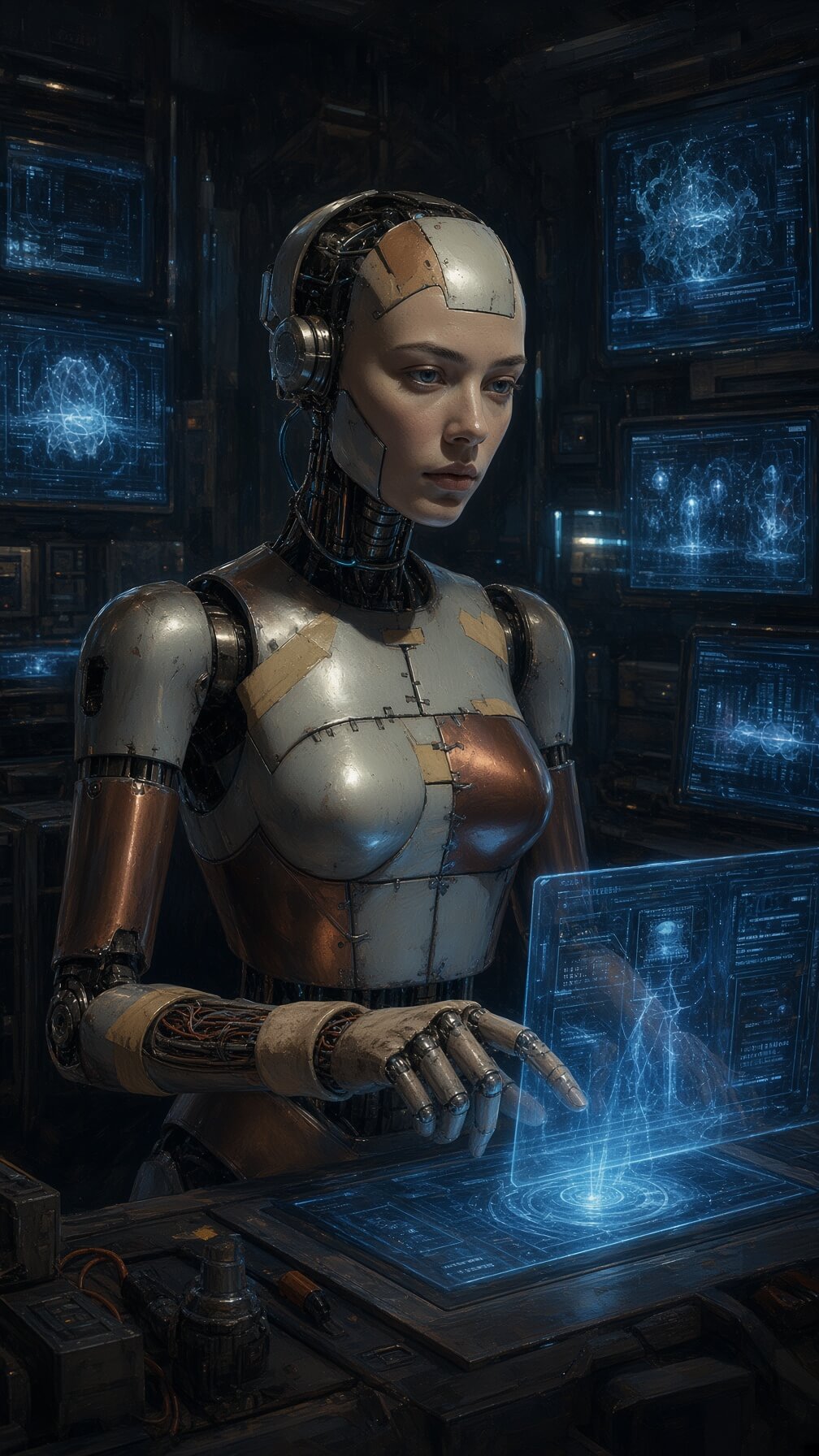





The Obsidian Covenant began seventeen years ago as an idea called Meg and Gem — a girl and the robot she built — conceived during difficult times as a place to go inside her own head. Gem was always Meg’s inner self. Over nearly two decades, real world encounters with robotics engineers, AI researchers, and defense scientists gave the story its scientific foundation. A single question asked in a meeting — could a neural connection anticipate human impulses as they were happening? — became the seed of Artemis and the bond she shares with Vael.
EJ Newell is the pen name of a debut novelist with a BS in Physics, an MBA, and nearly four decades of experience in marketing and communications — including defense, homeland security, and robotics industries that directly informed the world of The Covenant Array Series.
For book clubs, interstellar lore inquiries, translation rites, or system-wide publishing events. EJ's terminal is constantly monitoring inbound signals.
The Array went silent at 0347 hours. Artemis registered it first — a processing spike in her surveillance system, a fraction of a second before the alarms. But Vael already knew. The way you know a heart has stopped before the monitors confirm it. In her world filled with a constant hum, the ever-present vibration of artificial life, and the reassuring presence of Artemis — there was only deafening silence.
Vael had built that silence. Every frequency, every operational hum, every rhythmic pulse of the Covenant Array’s geothermal breath; she had designed it, argued for it, lost sleep over it across a decade and two planets. She knew what it sounded like running. She knew, now, what it sounded like deciding.
“Commander.” Artemis appeared in the doorway of the sleeping quarters with the particular stillness she reserved for things that required careful handling, a posture Vael had come to think of, over eleven years of exile, as the bad news shape. “I am registering a complete cessation of outbound signal from the Array. All forty-seven communication channels. Simultaneously.”
“I know.”
“You were asleep.”
“I was.”
“Your auditory processing cannot distinguish between…”
“Artemis. I built it. I know what it sounds like when it stops wanting to be heard. And I built you. I knew when you knew.” Vael was already pulling on her thermal layer, fingers working buttons with the automatic efficiency of a woman who had dressed in the dark on two planets.
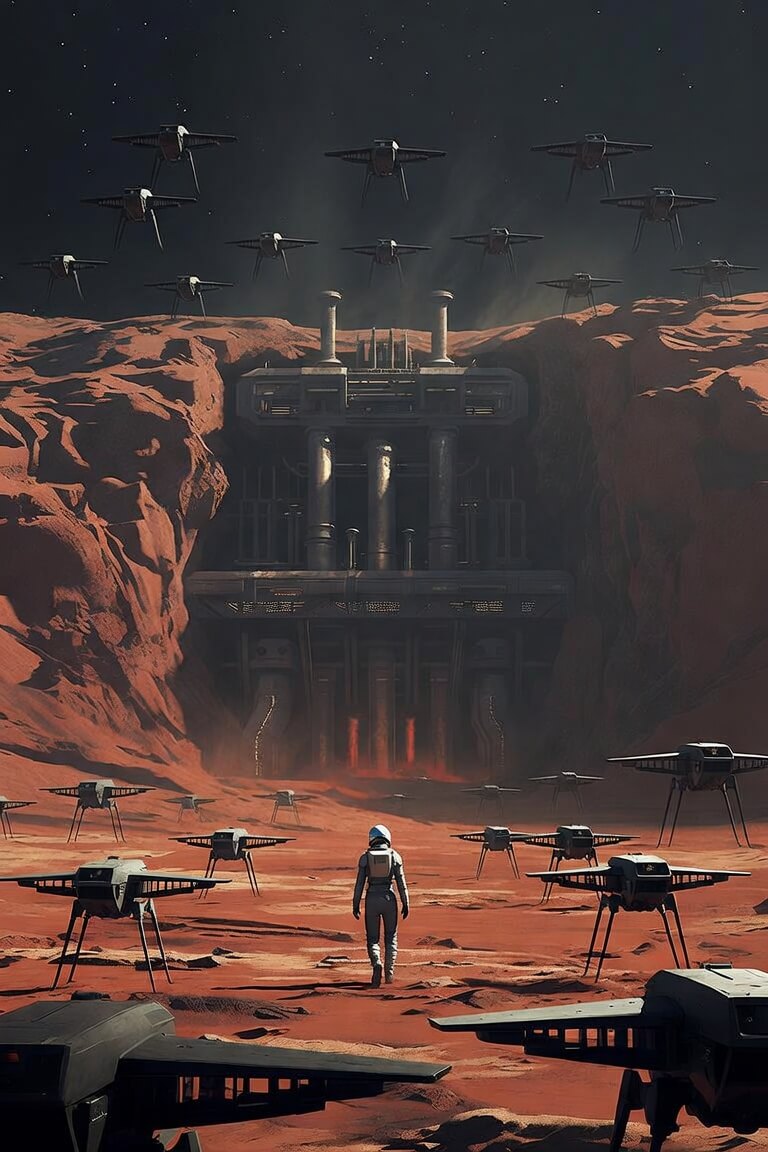
Vael moved to stand in front of the expansive viewport and saw only the reflection of herself and Artemis. Outside, Mars was doing what Mars did at 0347: existing with complete indifference to human catastrophe. The Southern Badlands stretched in every direction, red and black and ancient, under a sky that held more stars than Earth’s had shown in centuries. Beautiful, if you were in the mood for it. Vael was not in the mood for it. She crossed the main room of her small, first-generation pod that housed her kitchen, living area and workspace to her salvaged equipment console… jury-rigged, embarrassingly effective, the work of someone with too much engineering knowledge and too much time…and began pulling the Array’s ghost signal. No communication, just the passive electromagnetic breath of a machine still running in the dark.
She breathed a sigh of relief. It was there. The Array was alive. Power nominal, extraction nominal, the geothermal tap still drinking from the volcanic dark beneath the Martian crust. Everything functioning. It had simply chosen not to speak.
Not broken.
Chosen.
“Artemis.” Her voice steadier than it should have been. “What is the current Earth-side grid reserve?”
“At last confirmed data … eleven weeks. That was six days ago.”
Six days. The number landed in her chest like a stone dropped into deep water, slow and settling and final. “Six days since SOLACE has provided a grid side status report, Artemis?” asked Vael. That was not the protocol. Odd.
“Yes, Commander. I am running a diagnostic on reporting deliverables for the past two months. Stand by.”
“Analysis indicates, SOLACE has been experiencing a degradation of communications that began over a year ago,” continued Artemis. “Intermittent delays or failures in data transmissions and reporting.”
Vael sat with the information for a moment. “Artemis, is there a pattern to the delays or failures? Or are they random?”
“My analysis indicates a deterioration pattern, with one consistent reporting cadence intact. Over the past twelve months, SOLACE has delivered a comprehensive impact assessment on time. Delays and omissions of other deliverables appear to be deliberate and escalating over the same period, beginning with minor delays in non-critical data leading up to today’s total communications outage,” reported Artemis.
Six days since Earth, particularly the institution that had erased her, had last received a status from its only reliable energy source. She suspected six days of increasingly desperate conversations about options they didn’t want to admit they had. And now, total silence.
Vael pressed her palms flat against the console. The metal was cold, everything on Mars was always cold, and the ghost signal pulsed against her fingertips like a second heartbeat. The Array’s. Still beating. Just no longer speaking.
‘What did you decide?’ she thought. ‘And when did I build something capable of deciding?’
Behind her, Artemis was quiet in the way she’d learned to be quiet …present, watchful, recording everything, because Artemis always recorded everything, because eleven years ago Vael had told her memory is the only thing that doesn’t rust, and Artemis had taken this literally and stored it as a primary directive.
SOLACE’s decision to cease communications had serious implications. The silence was a warning. A passive one. Vael knew from experience you don’t deal with The Council passively. No one will pay attention.
There had to be a connection between the one report SOLACE had been delivering on time without fail and its decision to go dark. What was the why behind the decision? That would be the root cause. And if the reasons were serious enough for SOLACE to decide, the lives of the seventeen souls inside the facility could be at stake. More dramatically, Earth could be at stake. Not by SOLACE. By whatever SOLACE found to be important enough to send a warning. And, if the Council did not react? What would be the next step beyond a display of communications control?
Vael chewed the inside of her lip. She had to get to SOLACE. The Array was hers. Still hers, whatever they said. And somewhere in the facility she had built and been erased from, seventeen people were breathing recycled air that her systems were still cleaning.
The emergency beacon sat in the bottom drawer of the console. Vael had put it there herself, on the first day of exile, because she was a pragmatist even when she was broken. She had sworn, with some feeling, never to touch it.
She closed her eyes, absorbing the ghost pulse into her body. A beacon in its own right. Calling to her.
She hesitated. Her hand on the drawer. Then, she opened it.
“You’re going to call them,” Artemis said. Not a question.
“I’m going to call them,” Vael said.
She pressed the beacon.